
Labelling Your Emotions Is an Important First Step in Dealing With Them
Stress and anger can hide deeper feelings. Learn why labelling emotions accurately calms the brain, plus three practical ways to get better at it.
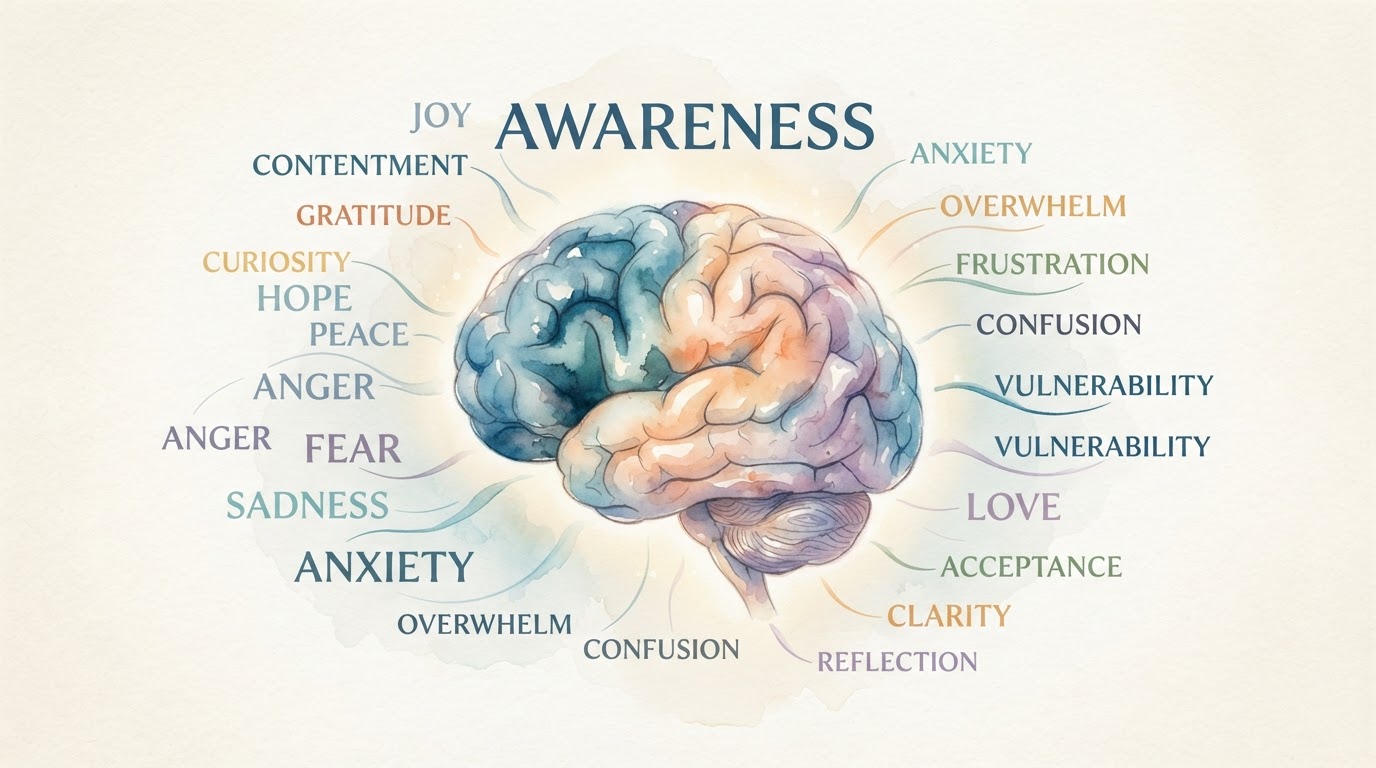
Are feelings like stress and anger masking deeper issues that are hard to define? How good are you at labelling your emotions?
Stress and anger are two words that are most frequently used to describe negative emotions at work. They may mask deeper issues that are hard to define!
Labelling our emotions is an important first step in dealing with them. However, this is harder than it sounds; many of us struggle to identify exactly what we feel, and often the most obvious label isn't actually the most accurate one.
Many of us have been trained to believe that strong emotions should be suppressed. Our society has certain, sometimes unspoken, rules against expressing emotions, and most of us have never learned a language to accurately describe our emotions.
Susan David, psychologist at Harvard Medical School and author of the best-selling book Emotional Agility, states that:
"Incorrectly diagnosing our emotions and those of the people who surround us makes us respond incorrectly. We will take a different approach if we think we need to attend to anger than if we are handling disappointment or anxiety."
Research on the Benefits of Labelling Emotions
Research shows that when people don't acknowledge and address their emotions, they display lower wellbeing and more physical symptoms of stress. Having the right vocabulary allows us to see the real issue at hand. This allows us to take a messy experience, understand it more clearly, and build a road map to address the problem.
Hariri et al. (2000) asked participants to view emotional facial expressions and assign either an emotional (e.g. angry, afraid) or a non-emotional (e.g. a male or female name for the face) label. They found that using an emotional label to describe the picture, compared to non-emotional ones, led to increased activation in inhibitory networks in the prefrontal cortex and reduced activation in the amygdala (an area involved in emotional responses). This pattern of neural activity is typically observed when individuals intentionally try to down-regulate or control their emotions (Ochsner et al., 2004). Thus, the process of putting emotions into words seems to unintentionally activate a process of emotion regulation.
Since then, various studies have replicated this effect (Lieberman et al., 2007) and illustrated the benefits of affect labelling more clearly. Labelling has been found to reduce the subjective experience of negative emotions (Lieberman et al., 2011), and also the experience of physical symptoms (Constantinou et al., 2014).
Furthermore, studies have shown that incorporating affect labelling in exposure therapy can increase the efficacy of treatment for specific phobias (Kircanski et al., 2012; Niles et al., 2015).
These findings from clinical studies suggest that affect labelling can be beneficial within a therapeutic context, especially for individuals with poor emotion regulation abilities (Niles et al., 2015). It seems that encouraging the categorising and labelling of emotions can initiate emotion regulation processes which would not otherwise spontaneously take place for these individuals.
Further support for this notion comes from research on expressive writing as a therapeutic tool, which shows that guiding individuals in writing about emotional events can have both mental and physical health benefits in the long term, especially for those individuals who have pronounced difficulties in identifying and describing their emotions (Baikie & Wilhelm, 2005).
Tips for Getting Better at Labelling Emotions
Susan David has described three ways you can get a more accurate and precise sense of your emotions:
1. Broaden your emotional vocabulary
If you are experiencing a strong emotion, take a moment to consider what to call it, then try to come up with two more words that describe your feeling. This way, people often find deeper emotions buried beneath the more obvious ones.
You should do this for positive as well as negative emotions. Being able to say that you are excited about a new job, and not just nervous, will help you set your intentions for the role in a way that is more likely to lead to success down the road.
2. Consider the intensity of the emotion
It is important to estimate the extremity of basic descriptors like "angry" or "stressed". Every emotion comes in a variety of flavours. When a friend describes his emotion as angry, he may just be annoyed or impatient. This insight may transform your perception of how others are feeling, and this way you can respond to a specific emotion without getting angry yourself.
Similarly, it is important to describe your own emotions in more depth, so that others can respond to your emotions accurately.
3. Write it out
This is how Susan David explains it:
"The experiments of James Pennebaker, an American social psychologist and the Centennial Liberal Arts Professor of Psychology at the University of Texas at Austin, who has done 40 years of research into the links between writing and emotional processing, revealed that people who write about emotionally charged episodes experience an increase in their physical and mental well-being. The process of writing allows people to gain a new perspective on their emotions and to understand them and their implications more clearly."
Here is an exercise you can do. When you are going through a tough time, it brings relief to reflect through writing:
- Set a timer for 20 minutes.
- Write about your emotional experience; go where your mind takes you.
- You don't have to save the document; the point is that those thoughts are now out of you and on the page, so that you can reflect on them.
These three approaches can be used when trying to better understand your own and another person's emotions, as we are equally likely to mislabel other people's emotions as our own.
By understanding emotions more accurately, you will be better equipped to respond in a constructive way that makes understanding yourself and others easier.
If you would like help understanding and managing difficult emotions, you can book a free 15-minute phone consultation.
References
Baikie, K. A., & Wilhelm, K. (2005). Emotional and physical health benefits of expressive writing. Advances in Psychiatric Treatment, 11(5), 338–346.
Constantinou, E., Van Den Houte, M., Bogaerts, K., Van Diest, I., & Van den Bergh, O. (2014). Can words heal? Using affect labeling to reduce the effects of unpleasant cues on symptom reporting. Frontiers in Psychology, 5, 807.
Hariri, A. R., Bookheimer, S. Y., & Mazziotta, J. C. (2000). Modulating emotional responses: Effects of a neocortical network on the limbic system. NeuroReport, 11(1), 43–48.
Kircanski, K., Lieberman, M. D., & Craske, M. G. (2012). Feelings into words: Contributions of language to exposure therapy. Psychological Science, 23(10), 1086–1091.
Lieberman, M. D., Eisenberger, N. I., Crockett, M. J., Tom, S. M., Pfeifer, J. H., & Way, B. M. (2007). Putting feelings into words: Affect labeling disrupts amygdala activity in response to affective stimuli. Psychological Science, 18(5), 421–428.
Lieberman, M. D., Inagaki, T. K., Tabibnia, G., & Crockett, M. J. (2011). Subjective responses to emotional stimuli during labeling, reappraisal, and distraction. Emotion, 11(3), 468–480.
Niles, A. N., Craske, M. G., Lieberman, M. D., & Hur, C. (2015). Affect labeling enhances exposure effectiveness for public speaking anxiety. Behaviour Research and Therapy, 68, 27–36.
Ochsner, K. N., Ray, R. D., Cooper, J. C., Robertson, E. R., Chopra, S., Gabrieli, J. D. E., & Gross, J. J. (2004). For better or for worse: Neural systems supporting the cognitive down- and up-regulation of negative emotion. NeuroImage, 23, 483–499.
Written by Franco Greco
Clinical & Counselling Psychologist • Internationally Accredited Schema Therapist • Gottman-trained. Melbourne-based, with in-person and Telehealth sessions.
If this resonates, take the next step
Articles inform — therapy transforms. A free 15-minute call is the simplest way to explore whether Franco's approach fits your needs.